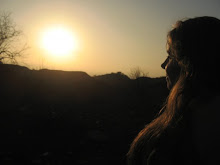
Paul calls her “the movie star” because of her striking beauty. This woman who hosted us for dinner this evening of June 16 has thick, lustrous hair that rises and falls in dark brown and auburn cascades down her back. Her frame is tiny or opulent in all the right places, like a Barbie only shorter and softer. Her face is made of straight, elegant lines. But you hardly notice any of this compared to her eyes. Her eyes are unbelievably large and they alternately smolder when she sings and then light up when she smiles. Her smile reveals gleaming white, straight teeth which go perfectly with her silky complexion. Ask to see a picture when I get home, I have taken several so that you all will believe me when I praise her. On top of it all, she has a perky, bubbly personality, sings like an angel, and cooks like a gourmet chef.
Unfortunately for the friends who have asked me to bring them home a few Pakistani wives, this woman, 23 year old Abana, is already taken. When Abana was 16, she declared that she wanted to marry Khurram, a distant cousin of hers. There were a few problems, though. Khurram was 8 years older than she and had never shown any particular interest in her before. Incredibly, when Khurram heard of Abana’s announcement, he admitted to feeling the same way about her. Thus started an 8 year tug of war in which they struggled to gain their families’ permission for them to marry.
His family was so stubbornly against his union with Abana that Khurram even offered to defy his family and run away with her, but Abana never gave up that her future mother in law would eventually concede. Khurram’s mother was dead set on him marrying his cousin, insisting that she would be a more suitable choice and that Abana was too high spirited, not suitably respectful to her elders etc. Eventually, Khurram broke down and, just to keep the peace, agreed to become engaged to the other girl. But as the years went slowly by, Abana never let go of her insistence that Khurram would be her husband. Eventually, because he was so miserable, Khurram’s mother allowed him to break off his engagement and to pursue Abana.
Three months later, in December 2010, Khurram and Abana were finally married. As I saw in the two albums of wedding pictures, Abana was a fairy princess in a white western wedding dress and a gypsy temptress in her red and gold tribal outfit, hena curling from her finger tips up her arms. Khurram was every inch the man, uncharacteristically tall and broad, like a great bear next to her. It was quite a spectacle, a true “love marriage” as a non-arranged marriage is called.
Now they live like characters in an Indian soap opera. Unlike most newly married couples, they have not moved in with the husband’s family. They have their own home in a former missionary’s house which is several rooms large and is made of finished walls and roof. The interior is furnished in a tastefully modern style with wicker furniture, glass coffee table, and seashell-themed decorations. The have a large backyard of green grass, a vegetable garden, and a large aviary full of parakeets and love birds. The far corner of their yard is fenced off to contain goats and three baby deer. As I gaped at the elegant luxury of their home, Pat explained that they belong to an upper class family and that 30 year old Khurram has recently taken over as the head of a None Governmental Organization (NGO) called SSEWA-Pak which does development work in rural areas. Their marriage sure seems to have a happily-ever-after ending. One thing is for sure, when a romantic-comedy/bollywood movie comes out based on their life, I want to see it!
By the way, I should point out that their experience is as uncommon here as the plot of Sweet Home Alabama is unusual in the states. Usually girls are married when they are 13-16 years old and the boy isn’t much older than that. Most people here cooperate with marriages arranged by their parents to people they’ve never met. In fact, one tradition at weddings is to weep and wail as the car takes the poor newly wed couple away. Usually the new wife moves in with her new husband who is still living with his parents (and the rest of the rest of his extended family who share the house.) Usually the girl is so homesick that she travels back to her family’s home every week or so for the first year while she tries to adjust to a new place, new family, and a new man. Khurram and Abana are a happy exception to the general rule. Hopefully they will stay happy and not follow in the footsteps of the domestic unrest and divorce that is so rampant in the US.
Thursday, June 17, 2010

How to stay clean in a dusty country: Have help
There is an interesting dichotomy here between squalor and cleanliness. The streets are full of trash (mainly plastic bags), discarded parts of fruits, and splatters of tobacco spit. Also, dust is everywhere. The streets are made of dirt, which is disturbed by tires and hooves, and the wind is continually depositing a layer of dust over everything! Inside a given shop, however, the shopkeepers maintain immaculate cleanliness. They slap at the floor, benches and counters with their version of a duster made of a rag attached to the end of a stick. They constantly polish and wipe their wares free of dust. The homes are also kept very clean in spite of often having dirt floors, thatched roofs, and wood-fire cook pits. They carefully maintain their work and living environments with more success than many westerners. Despite living in a situation which necessarily contains dirt, trash, and smoke (from burning trash and cook fires), these people are not dirty.
The Stock family mops their concrete floors every day in addition to daily dusting of all surfaces with a wet cloth. Electronics and bookshelves are covered with plastic when not in use to keep out the dust. They wash clothes every other day and would never wear something without ironing it first.
Pat is able to keep up with all this housework by employing a local woman to help. Every day a woman named Zivi (meaning “life”) comes to help wash dishes, clean, prepare lunch, iron clothes on the floor etc. The Stocks also help to support a man, Padri Emmanuel, who comes on Fridays to receive guests who call on the Stocks asking for medical help and advice. Another man, Babu, is employed to help with buying groceries and transporting villagers who come to the Stocks for rides. One other man, Unice, helps out by running the water pump and fixing things around the house.
Pat explained to me that in the west it seems strange to have a maid and that only the rich employ “servants” but this is because the “servants are included in the products”. Western families don’t have to boil water to wash dishes, boil their buffalo milk and scrape off the cream every morning, make most all of their meals from raw veggies and spices, make their own cat food from rice, chicken liver, and chicken feet, and bake their own tortillas one by one everyday to go with each meal. In the west, milk and pet food etc. come ready to use, already prepared by other hands. The Stock also must work around unexpected power-outages and empty water tanks. With a little help from the local people who need employment and are eager to help, Pat is able to keep up with daily cleaning and cooking while still having time to home school two children, lead Bible studies, attend village events, and receive village visitors etc.
It is currently after lunch. I am tired. Meals here spaced out in time (breakfast at 8:00am, lunch at 2:00, dinner at 8:oo or 9:00.) When meals do come, they are often relatively starch heavy. Veggie and chicken curries are served as garnishes to the tortillas used to scoop them up. Sweet snacks are available between meals in the form of mangos and sweet tea. All these factors combine to make me feel fairly light headed throughout the day. Thankfully, I am usually in a position to rest a little after lunch.
I don’t know how Pat does it. She works conscientiously from when she wakes at 7:00 until she allows herself to go to bed at midnight. She serves the family often without thanks, making people individualized breakfasts, cleaning up, reading aloud the children’s lessons to them etc. Pat’s way demonstrates impressive endurance and sacrifice but it is not likely to be my way when I have kids. If it were me, I would let the children toast their own toast for breakfast or make one meal for everyone. I would also have the children take turns reading the lesson aloud to each other while I cleaned or vice versa. And I would definitely institute a household siesta after starchy meals!
I am not likely to get to rest this afternoon, however. I am with Paul at his place of work, the Christian Audio Visual Center. Soon Pat will be coming here to lead aerobics class and then the whole family is going over for dinner to the house of "the movie star". More details on that in the next blog!
Tuesday, June 15, 2010
Notes on the Bazaar
Yesterday, June 10th, I went with Pat and Jodie to the bazaar again. Though this was my third time “into town”, I felt as though it was my first. The previous times, both before the cross-country trip to Murree, I was blinded by jetlag and terror of making a wrong step which would unwittingly start a riot or provoke someone to shoot me. Initially I kept my eyes on the ground or on Pat’s back, which was immediately in front of me at all times, and clutched my headscarf as though it was my only protection from martyrdom. I marveled at Pat’s fearless navigation the labyrinth of tunnel-like streets and ruthless haggling with the universally male shopkeepers. I marveled, but I kept my eyes down.
While in Murree, however, I went into town with Paul and Esther, Paul’s niece who is roughly my age. Esther, instead of cowering as I did, walked straight and tall, her shrewd eyes spotting roving bands of young men in time for her to steer me clear of them. “You are as good as a brother!” I laughingly remarked, grateful that she always positioned herself between me and danger and that she even lent me a steady arm as we walked down steep inclines or patches of slippery gravel.
“If someone touches you, make a fuss,” she told me. “Yell at them or something; otherwise they will think you like it.” I was dubious. The last thing I wanted was to make a scene. Wasn’t it safer just to slink away quietly? But watching Esther I realized that women in this culture are expected to be strong. Men who might behave inappropriately, staring or trying to touch you, are considered weak to temptation. Women compensate for the predominant weakness of the men by practicing extreme modesty etc. In the same spirit, if a man transgresses the bounds of polite society, a woman is expected to stand up for herself by upbraiding or physically lashing out at the man; passers by on the street would be expected to take up the woman’s case yelling at the man until he is sufficiently ashamed. Pat told me that once, when she had felt hands on her behind, she had turned around and socked the first thing she found. It turned out to be a rotund woman who had accidentally brushed past her. The woman was surprised, and slightly winded, but congenially understood Pat’s actions. So, watching Esther and remembering Pat, I slowly began to stand tall and go about my business with more confidence.
Because of this, when I went to the bazaar yesterday it was like going for the first time. I looked around, eager and curious. I breathed in the air, smelling the spices and smoke and animals. Beyond the appearance of a village market with only home grown vegetables and plastic trinkets, the bazaar offers a vast variety of wares. During the three hours we were bustling around the various shops, stands, and booths, we were able to buy pharmaceuticals, a bicycle, a washing machine, knitting needles, and a cell phone. On previous visits I had bought shoes, bracelets, cloth, and taken that cloth to a tailor who took my measurements to sew me “tailor made” clothes. One can also buy hena, celebration banners with money sewn in, guns, perfume, or an infinite variety of fruits, veggies, spices, sweets, and meats.
Each shop has one kind of thing, for example, bracelets. No outfit, unless exclusively used around the house, is complete without matching plastic or glass bracelets. You need maybe twenty on each arm but don’t worry, the whole set costs less than a dollar. The bracelet shop will be comprised of three walls of floor to ceiling shelves of boxes of bracelets in every color; the fourth wall, of course is open to the street. One only needs to say a color or present a cloth sample and the shopkeeper will pull out several boxes of possibilities mixing various combinations (ex. red, gold, black). Once you choose a variety that suits you, the shopkeeper finds the right size by squeezing your thumb into the palm and gently easing the bracelets across. I don’t know how they do this so effectively. Every time I try myself to get these same bracelets on or off, I end up with bloody cuts from the bracelets which snap in the process. When the shopkeeper finds the right size, he (it is always a he) wraps up the whole stack of 40 glass rings in newspaper.
One of my favorite kinds of shops is cloth shops. Again, the walls of the store are full of floor to ceiling shelves all containing of bolts of cloth. Customers come in and point out cloth that interests them and a shopkeeper pulls it out, slaps it down on the counter, unrolling several yards to be inspected. All cloth comes in sets of three (to be made into pants, shirt, and scarf). All three are brought down and unrolled together so pretty soon the counters are covered in cloths of all colors, fabrics, and prints. If Pat is the one shopping, she very well may not find any combination to suit her exact inclination or may be not be satisfied with the price. In that case, she will raise her hand and politely say, “Nay shookria, teek!” (no thank you, ok!) Then she will walk on to another of the endless rows of seemingly identical cloth shops, leaving the luckless shopkeeps to re-roll their wares and turn their attention to other customers.
Pat likes to find the best quality item for the lowest price and is willing to spend time, effort, and wheedling to get the best deal. This often means checking several (3-7) shops, meticulously examining their offerings and testing their prices. We had to go to every electronics dealer in Mirpurkhas checking washing machine prices before going back to the first store we'd visited to make a purchase! But when she finds a reliable merchant, she is very faithful. There is one tailor to whom Pat brings all her business. His shop is across from a nick-knack store in a dingy but quiet corner of the bazaar. His shop appears bare compared to other shops since it contains no wares, just five or six ancient sewing machines (the kind that is hand powered by spinning a metal wheel) and a lone manikin hanging from the roof to indicate the talent of the tailor. When we visited to drop off cloth to be turned into suits, the tailor sent one of the young men lounging in the shop off to fetch us glass bottles of Mountain Dew to sip while we perused magazine of clothes options. Pat explained to me that the sodas were this shop keeper’s way of thanking us for being such faithful customers. Two days later, when we picked up the new clothes, I saw why Pat favors this tailor. The three suits were tastefully and expertly made with creative necklines that complemented the fabric and matching sleeves all for only $10 each.
The shoe shops were my particular favorites. A shoe store window will be filled with an infinite variety of sandals. They come in all colors, all kinds of straps, beaded, jeweled, all kinds of heels, and all unbelievably pretty. I don’t usually put much thought or care into my shoes but the price of $2-$5 for a pair caught my attention. All one has to do is to point at an example shoe in a glass display case or give a color and the shopkeepers will pull out five or six boxes of shoe-variations on what you liked. The only difficulty is that people in this country are proportionately two thirds my size. Though the shopkeepers estimated by looking at my feet, few of the pretty little sandals fit me. Still, over the various visits to the bazaar I have found several pairs that suit me. I’m now at the point where I’ve forbidden myself to even look at the shoes because I can’t afford any more space in my suitcase!
The bazaar is an exciting place full of color and sound. It is full of life. People are making their livelihoods and buying the things they need to go on living. It has a very different feel from western shopping malls. There seems to be more variety and more of an emphasis on “goodness of fit”. There is an expectation of finding exactly what you are looking for. I found it alternately intimidating and energizing. I’m glad that I will never have to traverse it alone, but with Pat’s guidance, it is fun place to visit.
Friday, June 11, 2010
A Cheerful Heart Makes Good Medicine
Around 5:00 June 9th Pat and Jodie left to go to the exercise class that Pat leads three times a week. I stayed home because I felt very sick, but I promised Pat I would work with Joel on his math for half an hour. After waving goodbye to them, I roused Joel from his Harry Potter book and we settled down on the couch. I cannot say how rewarding it is to work with Joel on math. I don’t know if it is Joel, the math, or some magic combination, but after each of the two or three times I have worked with him I have felt satisfied and energized, very well pleased. I finally empathize with how Mom comes home in raptures after teaching math classes. Joel is patiently cooperative and there is a conspiratorial feeling to how we puzzle through the problems together. I am pleased when he takes my studying advice, keeping notes on what kinds of problems he got wrong the first time, and so gratified when he gets similar problems right when we come to them later. By the time we came to the end of one worksheet we both felt tired but accomplished, and no wonder, a full hour had gone by, twice as long as had been required.
The rest of the time before Pat returned, Joel and I sat together in the living room reading our respective novels, comfortably together in an amicable silence. When Pat and Jodie did arrive back at 8:00 I greeted them with almost giddy enthusiasm, feeling emotionally warm and accessible. I robustly joined in helping Pat and Grandma Margie with the dinner preparations while babbling best I could past my inflamed mouth about how a cheerful heart is the best medicine and how I couldn’t wait to be well again because it was sure to feel something like this!
It is amazing the difference that a lightness of spirit makes in one’s experience of external circumstances. I felt that evening, the day you received my most dejected email, that with a buoyancy of hope and cheerfulness, physical impediments can be endured with grace. It is like how if one only has a friend with them, an otherwise intimidating and foreign experience is transformed into an adventure. Truly, a cheerful heart is good medicine! The problem, as I explained to Pat and Margie while combining oil, egg, and mustard powder to whip up some mayonnaise, is that a cheerful heart can’t be bought from a pharmacy. Once weariness and doubt wear down your faithful hope and bitter thoughts are able to creep into you heart, once pain or fear or disappointment trip up your steadiness of spirit, even though you know in your mind that God has not changed and that you are not alone, how do you find again the cheerful heart that the Bible prescribes? That is the dilemma and once solved, the answer would serve well any health worker, be he or she promoting physical, psychological, or spiritual health.
Today, June 11th, I really do feel much better, physically and emotionally. The sores on my face are beginning to peel away and red skin underneath is not nearly as sensitive as before. The whole family was treated for lice last night, so hopefully that trial is behind us as well. Still, I know that health is always transitory. Perhaps I will have some time of health, letting me focus my attention and blogging on other areas of interest. Or perhaps some new affliction will arise within the hour, forcing my eyes only onto God and healing. In any case, please please please, continue to pray for God to sustain in me a cheerful heart. This variable of peaceful hope is the element which makes all the difference.
I would also greatly appreciate your continued prayer for the physical well-being of those who are here in this home, in this compound. As I start to recover, three of the children of various hostel staffers who live in the compound with us are suffering from various illnesses. The most alarming of these illnesses is a two and a half week fever which does not respond to malaria medication though the girl tested positive for malaria. Even closer to home, Mrs. Margie Stock has returned to her bed with a fever and other symptoms much like those that sent her to the hospital in Karachi a few weeks ago. This resurgence of dangerous symptoms is particularly inconvenient because Mr.Fred, Mrs. Margie, and Ashley are supposed to fly out of the country Monday! Please pray for God, the Great Physician, to be with us here in this compound, for the healing of the staff children, for the full and swift recovery of Margie, and for my own recovery to continue unabated. But again, most of all, pray for strength of spirit. Trials always come and go and replace each other in different forms. May God give us all the grace to prevail and grow through all kinds of circumstances.
Wednesday, June 9, 2010
Sorrow and Suffering: the traveling companions chosen by the Shepherd
My cocksacki is back as of last night, full force. The burning pain, itch, exhaustion, and embarrassment are really putting a damper on my spirit. Discouraged thoughts like, “I’m just not cut out for this life” or “if only I could be home…” keep running through my mind. I have to make a concerted effort to remind myself that no matter where I am, if I have cocksacki, I will be miserable, even at home. Things could be much worse, I think to myself. Then a grim voice in my head points out, things could easily get worse. In the end, I must continually remember that I am certain that God led me here and that it is for a purpose. I have only this time, these 500 days, to learn the lessons taught here and to make the difference I am supposed to. Other challenges await me when I return to the US (finding a job, a place to live, making graduate school research and applications etc.) Now all I have to do is endure and pray. It is sort of like being in a refining fire; very uncomfortable but not too demanding.
And yet I don’t feel like I am accomplishing anything! I feel like more of a burden on this wonderful family rather than a help. My enthusiasm for the local people and lifestyle has been taxed by my immediate pain and fear, on top of the usual difficulty of language and culture barriers. I thought that this trip was going to set me on fire for mission work and for living by faith. And yet all I feel is burned and tired, disinclined to either persist or return. Still, I know that these are fickle feelings. Only two days ago I was praising God literally on the mountain top, thanking Him for giving me the chance to meet the Murree community. My frustrations might evaporate along with my physical pain. Maybe. Who knows; God knows.
God brought me here. He gave me the opportunity, the motivation, the peace, the funds, the visa etc. He must have a purpose, if only to bless me or to bless others through me. But I feel intuitively that God’s purposes for this trip are more extensive than that. I have lessons to learn, growing to do, people to meet, hearts to touch, love to spread. I wanted to find Christ in the wilderness and part of the wilderness is pain. Christ knows the benefits of suffering. I can trust suffering by His hand. “And though he slay me, still I’ll trust in him!” (Job) Abuelita warned me that suffering would come on this trip and she recommended that I “offer it up” as part of my intercession. Perhaps this great suffering can play a significant part in my ministry here.
Speaking of suffering, today (June 8) was spent in remembrance of the life and death of Paul’s brother, Dale. Dale’s wife, children, and brother-in-law are here visiting. Eight years ago, while on vacation at a lake, Dale Stock drowned while rescuing three children who were struggling with a wicked undertow. This morning all 12 of us (Dale’s wife Nicky and their two children, Nicky’s brother Simon, Paul and his family except for Elisha, Paul’s parents and I,) got up at 4:30am to drive to the place where Dale Stock died. It was the first time that Dale’s wife and children had been back to the place where they lost their husband and father.
At first, we had a lot of trouble finding the right place, as the lake stretched for miles of blue and green water, islands, peninsulas, and shores. It was further difficult to for Nicky, Dale’s wife, to direct the driver, because she hadn’t been to the lake in 8 years, plenty of time for flood waters and construction to change the shoreline. After much driving around, we located a place on the shore that Nicky estimated was close to where the tragedy had occurred. We sat on the shore of the vast blue lake, sang songs and thanked God for Dale’s life.
After some time, we piled back into the van that had driven us there and drove on to the village where Dale and his family had lived and worked. We were greeted there by several families. Smiling reunions soon turned into wailing as it turned out that there had been a recent death in the village and it is customary to weep together the first time friends encounter each other after the death. This mourning together is called “afsocing”. After reunions, condolences, and introductions, the pastor’s family served us chicken curry, rice, and “rotis” (the flat bread used to scoop up the other food instead of cutlery.)
After lunch, while the tea was being brewed, I followed members of our party around as they wandered over the grounds reminiscing. I saw the now abandoned house where Nicky, Dale and their family had lived. I also was shown the structure next door which Nicky had used as a medical clinic. Nicky shook her head at the collapsed roof, dissolved screens, and heaps of rubble lying around. While Dale had been alive, nothing had ever fallen into disrepair.
After drinking tea with the village, we drove to Dale’s grave. The grave was situated in a Christian/Hindu plot set apart from the Muslim grave yard. No barrier separated the graveyard from the road except for a steep slope leading from the road down to the graveyard. The graveyard was not at all “yard”-like as there was no grass or any growing things. The scattered earth mounds above fresher graves and various stone markers rose directly from the expanse of mud and clay. Dale’s grave was unusual in that it had a great concrete coffin-like block where other graves had dirt mounds. Upon this block of stone was laid a white marble cross. Mr.Fred Stock, Paul’s father, explained to me that the cross had intentionally been laid horizontal so that Muslims could not knock it down. After draping deep pink flowers over the grave, we retreated from the withering heat to shade of the van and drove away.
I was honored to be witness to the memories celebrated today. It is amazing that this family has been able to persist in pouring themselves out in this land even in the face of such loss. Over four generations of mission work, 11 members of the Stock family have been buried in Pakistan. Instead of bitterness or discouragement, Dale’s wife and children are quietly and consistently carrying out his legacy. This dedication and love puts my complaints to shame. Please pray for the condition of my heart in addition to that of my body over the next few days. Pray that God would give me His perspective on my struggle and my service here. Pray He would place in me His heart and thus His peace and patience. Pray for me not to avoid any of the precious worth of having Sorrow and Suffering as traveling companions.
Tuesday, June 1, 2010
The Train to Murree
The Stocks weren’t kidding when they laughingly told me that the 24 hour train ride from Mirpurkhas on the southern boarder to Murree where the missionary school is nestled in the foothills of the Himalaya mountains would take my initiation into the Pakistani lifestyle to a whole new level. I spent Saturday morning playing with my new hostel children friends and sitting in on a Urdu Bible lesson. At 1:30 Paul bustled in calling, “We have only 2 and a half hours to get ready!” We needed to pack for our week at Ashley’s boarding school in Murree. Paul wanted very much for us all to be on the road to Hyderabad, the city with the train station, by 4:00 so that we could stop to visit a man in the hospital. Unfortunately, the rushing around accumulating sheets, clothes, books, games, and food took until 5:00 and we had just time to be driven two hours to catch our 7:30 train.
As the car took us to Hyderabad, the desert scenery rolling and bouncing by, I tried to doze. I awoke as we were pulling into the city. I stared as Paul pointed out the towering remains of a brick fort build in the age of the Mogal Empire. It was already beginning to get dark by the time we unloaded at the station. Old porters with dark, weathered skin and white hair wrapped cloth around their foreheads and stacked our large, clumsy suitcases two high on top of their heads. I wasn’t feeling well at the time waiting on the station and the time went by in a blur of beggars, chattering passers by, and rushing trains.
Right on time, our train pulled up and I was waved aboard and into a compartment along with the four Stocks, our ten pieces of luggage, and one unfortunate single man who seemed decidedly unimpressed by the noisy bustle of our overwhelming party. The compartment consisted of two six foot long benches facing each other across as two foot wide isle. Two cushioned platforms upon which one could recline formed a roof six feet above the benches. It turned out that the cushions on the walls folded down to create a middle layer of bed space. In this way, the compartment could easily accommodate six passengers sleeping on their own cots in three layers. Between the two bottom benches, a one foot by one foot table stuck out from the far wall underneath a window out into the countryside.
One accommodation that wasn’t quite as delightful, though it didn’t bother the seasoned Stock family, were the toilets. They were located on the ends of the rocking rail cars and came in two varieties. The eastern style toilets are holes in the ground situated between two places to put your feet, ridged for better traction while squatting. Next to the hole is a pipe from which water can be drawn; this water is used instead of paper. Is this too graphic? If it isn’t too graphic to be experienced on an average day in Pakistan, it is not too graphic to be shared. The alternative to the eastern toilets were western style toilets. Surprisingly, the Stocks said that these western toilets are actually less sanitary than the eastern ones. Apparently, some Pakistanis don’t know how the western toilets are meant to be used and sometimes clime on top of the plastic seat to squat in their familiar way.
Once we got settled in, the Stocks nestled down to enjoy the 24 hour vacation. Books, cards, i-pods, and movies appeared from the bursting backpacks. The Stocks also enjoyed buying chai, juice and other snacks from the porters that walked the halls of the train calling out their wares. I felt a little sorry for the one Pakistani passenger who glanced at us disparagingly and sat outside the compartment until retiring to one of the top bunks around 9:00. The rest of us, on the other hand, watched Julie and Julia, before collapsing in bed at 1:30am.
At around 10:00am the following morning, I woke up. Most of the day was spent in relaxation, enjoying games of cards and movies (Push and Extraordinary Measures.) Exhausted and with increasing discomfort in my mouth from extensive cold sores which made it hard to speak, eat, or smile, I spent a fair amount of the time napping and reading from my novel, Duncton Wood.
I awoke from one of my naps to find that the train had stopped and that Paul Stock was anxiously holding out, for his wife’s inspection, his suspiciously empty ipod pouch. After a scrambled searched of our bags, we determined that the item was no longer among our things. The loss of the device was made all the worse by the fact that the ipod contained the only copy of many of Paul’s mother personal stories. I prayed silently that God would return to us the presumably stolen piece of property. The Stocks never gave up. After not too much time, suspicion turned on the placid Pakistani sitting by. After a search of his bag, one of Paul’s ipod wires was found. Paul demanded that the man return to him the ipod or Paul would call the police. Submissively, the man led Paul to the notorious bathroom and produced the ipod from above the light fixture. The man thanked Paul for not calling the police and offered to spend the rest of the trip outside the compartment, an offer Paul grimly accepted.
During the excitement of the missing ipod, I hadn’t noticed that the train had never commenced its journey. It turned out that our train needed a new engine. With the pleasant Pakistani disregard for lateness or lost time, we waited and waited, the Stocks cheerfully enjoying the extra time to relax with each other. Eventually another engine was brought to our train and we felt ourselves begin again to move. This engine, however, was not nearly as strong and the train rumbled along at a fraction of the previous speed. By the time we arrived in Rawalpini at 2:30am, the train was seven hours later than planned but not much later than expected. In a daze, I tagged along, clinging to my luggage, as the Stocks led the way off the platform and to a taxi to finish the last two hours of our trip from the city to the school. We arrived as the sun was rising over the Himalayas. I barely remember dragging our things up the steep path to the “Stock House” inside of which I collapsed on a bed and finally slept. I am now sitting on the same bed, twenty four hours later and must bid you again, goodnight!
Current Concerns:Missing You
Thank you again for your prayers and emotional support. The past few days have been arduous to say the least. The Stocks and I have traveled from their home in the south of Pakistan all the way to the Himalayas in the north. During the 30 hour train trip, I became sick with mouth sores that made me unable to eat, talk, or sleep easily. Once we arrived, I found that I had also come down with a stomach bug which tied my stomach in knots and forced me to stay near a bathroom at all times. Everyone here at the international mission school in Murree have been more than kind. One woman gave me some vitamins and salve for my mouth, another allowed me to sleep all afternoon on her bed.
Over the past two days or so, I have slept as much as I have been awake and physically I feel dramatically better. I am able to eat, talk, smile, and sing (something I missed very much.) Still, I feel very drained emotionally and physically. I found this afternoon that I retired to a bed for a four hour nap as much from emotional withdrawal as from physical exhaustion. I find myself to be easily brought to tears by witnessing the loving families here and the pride everyone has over the graduating class. I am moved by the familiar praise songs, (Give us Clean Hands, Be Thou My Vision etc). And the background sound of various people speaking in German is music to my ears. Suffice to say, I am hungry for the familiar and the secure; I miss the warmth of established, familial friendships; tears leak out when I am reminded of school, of family, of home.
And yet, as one of the young missionaries who had graduated from Murree two years ago pointed out very astutely, God is home. Unless we can find our satisfaction and rest in God, we will never find “home” no matter where we are. And unless we can recognize our spiritual family in the members of His body, we will never truly have the depth of relationship which we long for and need. I must find my home in God. And as for the friends who are now far away, a wise friend of mine told me before I left that the distance between me and God is zero and the distance between God and every other believer is zero. Therefore, the distance between me and those I love is also zero. I pray that God will teach me to rest in the shadow of His wings and find my peace in His presence. I pray that He will teach me to find support and fellowship in whichever of His children are near me here and now.
One funny thing about being here in Murree and feeling homesick is that the people here already feel so uncannily familiar. Since we are here for the graduation of the senior class, many whole families have come to celebrate. Seeing these intergenerational families who have grown up together in ministry as their children have grown up together in boarding school reminds me so much of Family Camp 2 at Camp Hebron. Moreover, the people here are just the kind of people I enjoy and trust. These families minister all over Pakistan and originate from all over the world, Germany, Australia, Korea and Great Britain being the largest countries of origin. I am surrounded by various beautiful accents, languages, and backgrounds, one common denominator, however, being their colorful, loose-fitting Pakistani clothes. The youth are vibrant and creative. In the two days I’ve been here I’ve had the pleasure to watch a production of Agatha Christi’s “An Appointment with Death”, a band performance, a choir performance, and to walk the halls lined with art and science projects. Seeing these families gives me a feeling that is like having dejavu, or having a word on the tip of your tongue. I feel recognition and affection, but when I look closer, I find that the person is a stranger and they do not know me as I feel I know them.
Please keep me in your prayers, especially next Saturday and Sunday as we will be taking the train back down to Mirpurkhas. I am afraid of a rebound of the physical symptoms I am only just recovering from. Please pray for me to find rest from my culture shock and relief from my loneliness. I love you and pray for you as you are often on my mind. Thank you for your faithful love.
Subscribe to:
Posts (Atom)